
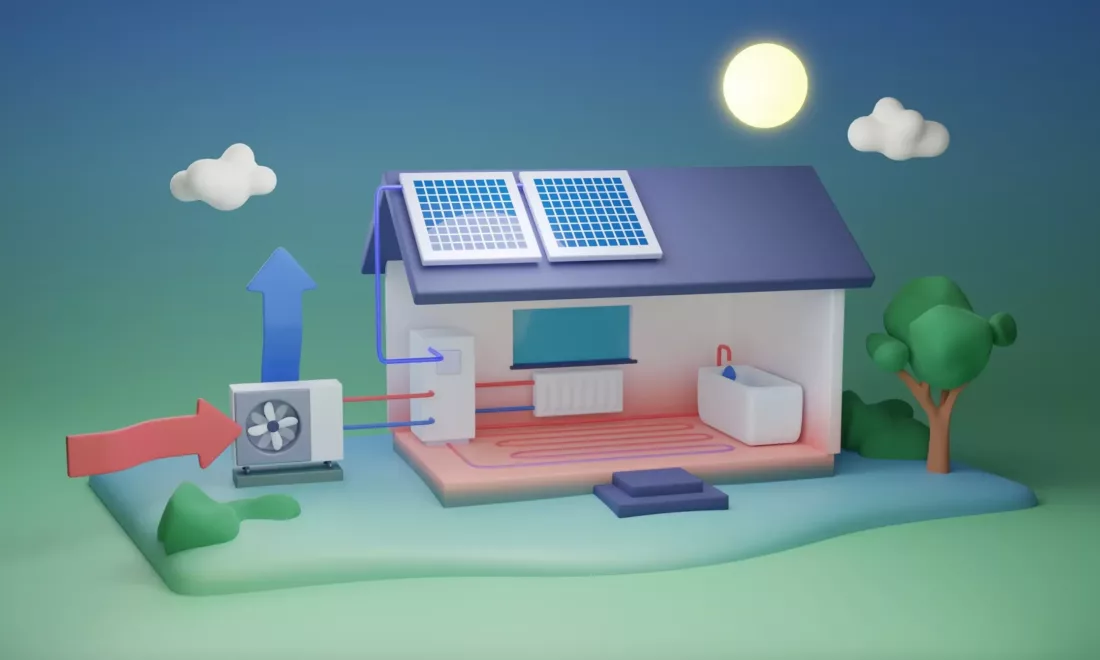
As more homeowners across Stockport, Greater Manchester and the wider North West look for long-term ways to lower heating bills, one renewable pairing consistently stands out above the rest.
Solar panels + an air source heat pump.
Individually, both technologies offer strong savings.
But together, they form one of the most efficient, low-carbon heating systems available to UK homes. In some cases enabling households to run their heating at extremely low cost and even enjoy periods of “free heating” during daylight hours.
This guide explains how this renewable energy combination works, what you can realistically expect in the UK climate, and why more homeowners in Greater Manchester are pairing solar and heat pumps from 2025 onwards.
Why Solar Panels and Heat Pumps Work Perfectly Together
Solar PV systems generate electricity from daylight.
Air source heat pumps use electricity to produce clean, efficient heating and hot water.
When combined, the electricity your solar system produces can directly power your heat pump, reducing its running cost dramatically and providing lower heating bills.
In simple terms:
Solar creates renewable electricity
➜
The heat pump multiplies that electricity into 3–4x more heat energy
➜
Your home stays warm using very little grid power
This smart pairing is why thousands of UK homes are moving towards the “renewable energy combo”.
How Much Heating Can Solar Panels Really Provide?
A common question is whether UK solar panels can provide enough power for a heat pump, especially in autumn and winter.
The reality:
Solar will not power your heat pump all day in winter, but it still provides valuable “free energy” that will lower heating bills.
Here’s how the relationship works across the seasons:
Spring & Summer
- Significant solar generation
- Heat pumps run efficiently for hot water
- Many homes achieve completely “free” hot water between April–September
- Some households export surplus power
Autumn
- Lower but still meaningful solar generation
- Heat pumps begin heating homes
- Solar can offset a large part of daytime heating costs
Winter
- Reduced solar, but still beneficial
- Solar can cover part of the heat pump’s demand
- Smart scheduling can maximise free energy
Check out the Energy Saving Trust for extra Solar & Heat Pump Guidance.
Why Heat Pumps Are the Best Match for Solar Panels
Heat pumps have an incredibly high efficiency, typically 300–400% (COP 3–4).
This means:
1 unit of electricity
can produce
3–4 units of heat.
When that electricity is free solar power?
Your heating becomes extremely cheap to run.
Example:
If your solar panels generate 2 kWh at midday, a heat pump can turn that into 6–8 kWh of heat — enough to warm the home or produce hot water at almost no cost.
This is a major advantage compared to traditional heating systems, which cannot multiply energy in this way.
Add a Battery for Even Bigger Savings
A battery storage system allows you to store excess solar energy during the day and use it to run your heat pump later.
This can meaningfully increase your level of “solar-powered heating”, especially during:
- Early mornings
- Evenings
- Cloudy conditions
Battery storage is becoming more common across Stockport and Manchester due to falling prices and higher energy tariffs.
What Size Solar System Do You Need to Power a Heat Pump?
Every home is different, but most renewable-ready homes install:
- 4–6 kWp solar system
- Optional 5–10 kWh battery
- Heat pump sized between 5–12 kW
A site survey ensures the system is balanced for your property’s energy profile.
Will This Work in Stockport and Greater Manchester?
Absolutely.
Greater Manchester receives enough annual daylight to make solar PV a highly effective technology, even in winter months.
Local homes benefit from:
✔ Good roof orientations
✔ Fairly consistent daylight levels
✔ Heat pumps that operate efficiently even below 0°C
✔ Smart tariffs from suppliers such as Octopus Energy
Stockport is one of the fastest-growing areas for renewable installations in the North West — and the solar + heat pump combination is now one of the most requested system upgrades.
Costs and Savings – What You Can Expect (these are ball park figures as all requirements are different).
Solar PV cost: £4,500–£8,000
Heat pump cost after BUS grant (if eligible): £3,000–£7,000 (net)
Battery storage: £2,500–£6,000
Typical savings (when combined):
- Up to 70% off heating costs
- Free hot water for much of the year
- Significantly reduced electricity bills
- Improved EPC rating
- Increased property value
For many homes, the combined system pays back within 6–10 years. But on an almost daily basis this system will also lower heating bills.
Why Choose Solarus for Your Combined System?
We are fully certified renewable energy installers serving:
✔ Stockport
✔ Greater Manchester
✔ Cheshire
✔ The North West
Our accreditations include:
- MCS Certified (Solar PV, Battery Storage & Heat Pumps)
- NICEIC (Approved Contractors & Residential Installers)
- CHAS Accredited
- Which? Trusted Traders
- Octopus Energy Trusted Partner
We design full renewable systems including solar, heat pumps, battery storage, EV charging solutions and electrical upgrades.
Is Solar + Heat Pump Right for Your Home?
If you want:
✔ Lower heating bills
✔ Reduced carbon emissions
✔ Future-proof heating
✔ Better energy independence
…then this renewable combination is one of the smartest investments you can make.
To speak with our team or arrange a site survey.