
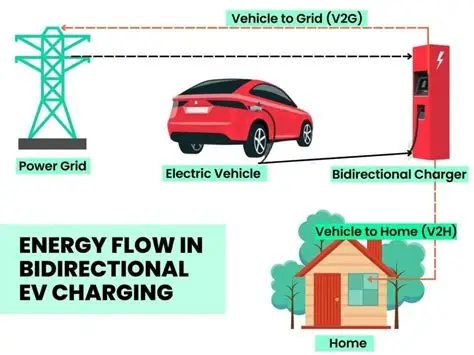
Electric vehicles are rapidly transforming both transportation and energy systems across the UK. In areas like Stockport and Greater Manchester, EV adoption is growing quickly as more homeowners install solar panels, home batteries, and EV chargers to reduce energy costs and carbon emissions. But EVs are more than just vehicles, they are also large mobile energy storage systems. This is where bidirectional EV charging V2X technology becomes important.
Instead of electricity flowing only into the car, energy can also flow out of the battery to power homes, support buildings, or even stabilise the electricity grid. As integrated energy platforms evolve, including systems developed by Sigenergy, many experts are beginning to ask an important question:
Is Vehicle-to-Grid (V2G) the future of energy?
For homeowners in Stockport and across Greater Manchester, this technology could play a major role in how homes manage electricity over the coming decade.
What is Bidirectional EV Charging V2X?
Traditional EV charging works in one direction.
Electricity flows from the grid into the vehicle battery.
With bidirectional EV charging, electricity can also flow in the opposite direction.
This forms part of Vehicle-to-Everything (V2X) technology.
Common V2X applications include:
| Technology | Description |
| Vehicle-to-Grid (V2G) | EV supplies electricity back to the grid |
| Vehicle-to-Home (V2H) | EV powers a home |
| Vehicle-to-Building (V2B) | EV supports commercial buildings |
| Vehicle-to-Load (V2L) | EV powers appliances or equipment |
In simple terms, V2X turns an electric vehicle into a large flexible battery.
Most modern EV batteries store 65–80 kWh of energy, which is significantly larger than most residential battery systems.
According to the International Energy Agency, electric vehicle adoption is accelerating worldwide, creating huge potential for distributed energy storage in homes and communities.
The Home Battery Sizing Problem
When designing a home energy system, one key question always comes up:
How large should the home battery be?
Electricity demand can vary dramatically throughout the year, particularly in homes using air source heat pumps, which are increasingly popular across Greater Manchester.
Typical electricity consumption may look like this:
| Season | Electricity Demand |
| Summer | 10–15 kWh |
| Spring / Autumn | 20–35 kWh |
| Winter (with heat pump) | 50–80 kWh |
If a homeowner sized their battery purely for worst-case winter demand, they might need 60–80 kWh of stationary storage.
However, installing a battery this large is usually impractical due to cost and payback periods.
High demand generally occurs only during short winter periods.
This is where bidirectional EV charging V2X systems become extremely valuable.
Using an EV to Supplement a Home Battery
Instead of installing a very large stationary battery, homeowners can design a layered energy system.
Example configuration:
| Component | Capacity |
| Home battery | 15–20 kWh |
| EV battery | 65–80 kWh |
The home battery manages daily energy optimisation, while the EV provides additional capacity during peak demand.
This allows homeowners in Stockport and across Greater Manchester to size their home battery for normal daily usage rather than extreme winter demand.
When required, the EV battery can support the home through Vehicle-to-Home (V2H) functionality.
Off-Peak Energy Tariffs and Smart Charging
Time-of-use electricity tariffs make this strategy even more effective.
In the UK, EV-focused tariffs such as those offered by Octopus Energy provide very low overnight electricity prices.
Example pricing:
| Time | Electricity Price |
| Overnight (off-peak) | ~7p/kWh |
| Standard daytime | ~24p/kWh |
| Evening peak | 30p+/kWh |
Using these tariffs, homeowners can charge both their EV and home battery overnight when electricity is cheapest.
For example:
Charging 40 kWh overnight at 7p/kWh costs:
£2.80
Buying the same electricity during the day at 24p/kWh would cost:
£9.60
This creates a daily saving of £6.80 simply by shifting when electricity is purchased.
More information about EV charging tariffs can be found via the the Money Saving Expert website.
Example Winter Energy Strategy
Consider a home in Greater Manchester with:
- solar PV
- a 20 kWh home battery
- an EV with a 75 kWh battery
- an air source heat pump
Daily winter consumption may reach 60 kWh.
A typical energy strategy might look like this:
Overnight
- Charge the home battery
- Charge the EV using cheap off-peak electricity
Daytime
- Run the house from stored energy and solar generation
Evening Peak
- Home battery discharges
- EV supplements the home using Vehicle-to-Home (V2H)
Instead of importing expensive electricity during peak hours, the home runs primarily on energy stored overnight.
Sigenergy Smart Energy Ecosystem Explained
Coordinating solar generation, battery storage, EV charging, and electricity tariffs requires intelligent system control.
This is where the Sigenergy smart energy ecosystem becomes important.
The platform integrates several technologies into a single energy management system:
- solar inverter technology
- modular battery storage
- EV charging
- AI-driven energy optimisation
A key component is the Sigenergy DC EV charger, which supports bidirectional energy flow and high-power charging.
Key capabilities include:
- DC charging up to 25 kW
- integration with solar and battery systems
- AI optimisation based on tariffs and household demand
By coordinating energy flows automatically, the system can:
- charge batteries during cheap tariff periods
- maximise solar self-consumption
- discharge stored energy during high-price periods
This allows the EV, home battery, and solar system to operate as a single intelligent energy platform.
Which Electric Vehicles Support Bidirectional Charging?
Not all EVs currently support bidirectional EV charging V2X, but the number of compatible models is increasing.
Examples include:
- Nissan Leaf – supports Vehicle-to-Grid via CHAdeMO
- Hyundai Ioniq 5 – supports Vehicle-to-Load functionality
- Kia EV6 – similar V2L capability with large battery capacity
As charging standards evolve and CCS bidirectional charging becomes more widely supported, many future EV models are expected to include V2X capability.
Is V2G the Future of Energy?
Electric vehicles represent one of the largest untapped energy storage resources in modern electricity systems.
As EV adoption continues to grow across the UK, millions of vehicles could collectively provide gigawatt-hours of distributed energy storage.
Combined with:
- solar generation
- home battery systems
- intelligent energy management platforms
bidirectional charging could fundamentally change how electricity networks operate.
Instead of relying entirely on centralised power generation, future energy systems may rely on distributed storage across homes and vehicles.
For homeowners in Stockport and Greater Manchester, this could mean greater energy independence and lower electricity costs.
Conclusion
Bidirectional EV charging V2X has the potential to transform how homes manage electricity.
By combining:
- solar generation
- a moderately sized home battery
- an EV capable of bidirectional charging
homeowners can create a flexible energy system that adapts to seasonal demand.
Rather than installing an oversized stationary battery for winter usage, the EV provides additional storage capacity when needed.
Integrated platforms such as the Sigenergy smart energy ecosystem demonstrate how transportation and home energy systems are beginning to merge.
In the near future, the electric vehicle parked on your driveway may become one of the most valuable components of the home energy system.
Learn More About Smart Home Energy Systems
If you’re considering installing solar panels, EV chargers, or battery storage in Stockport or Greater Manchester, our team can help design the right system for your home.